

Date: Feb. 2, 2026
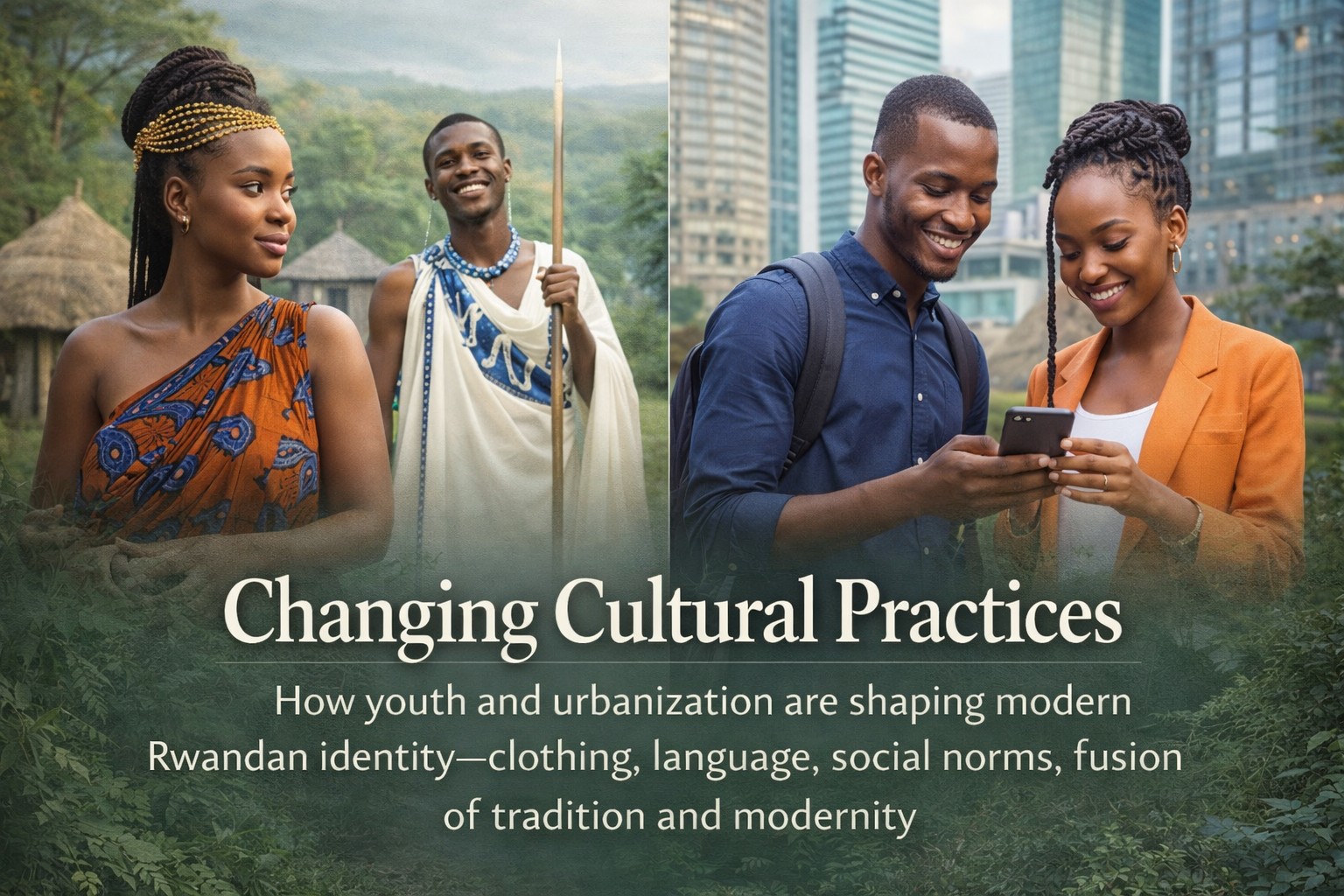
Rwanda is a country with a rich cultural heritage, from traditional dances and clothing to community rituals and oral histories. Over the past few decades, youth, urbanization, and globalization have started shaping a modern Rwandan identity. While traditions remain important, they are now blended with contemporary lifestyles, global influences, and new social norms. This blog explores how youth and urbanization influence clothing, language, social norms, and cultural practices in Rwanda, highlighting both challenges and opportunities. The Role of Youth in Cultural Change Rwandan youth, who make up a large portion of the population, are at the forefront of cultural evolution: 1. Adopting Global Trends – Young Rwandans mix traditional elements with modern fashion, music, and social media trends. 2. Reinterpreting Traditions – Cultural dances, festivals, and rituals are adapted for urban audiences and youth participation. 3. Digital Storytelling – Social media and online platforms allow young people to share traditional stories, music, and crafts globally. 4. Education and Awareness – Schools and universities expose youth to diverse perspectives, influencing how they perceive cultural identity. Youth play a key role in preserving, transforming, and promoting culture, bridging the old and the new. Urbanization and Its Impact on Culture Urbanization brings both opportunities and challenges for Rwandan culture: 1. Blending Rural and Urban Lifestyles • People moving to cities bring rural traditions, festivals, and food habits. • Cities provide a space to mix traditional practices with modern life, creating hybrid cultural expressions. 2. Modern Fashion and Clothing • Traditional attire like Umushanana (women’s dress) and Imikenyero (men’s accessories) is now often paired with modern clothing. • Urban youth experiment with styles, fabrics, and colors, while still honoring cultural roots. 3. Language Evolution • While Kinyarwanda remains central, youth increasingly mix it with English, French, and slang, reflecting global exposure. • Urban communication often blends languages, creating new expressions, idioms, and humor. 4. Shifts in Social Norms • Marriage, family roles, and community responsibilities are adapting to modern lifestyles. • Youth embrace gender equality, education, and professional aspirations, while still respecting traditions. Contemporary Expressions of Rwandan Culture 1. Music and Dance • Traditional dances like Intore are performed in new formats for concerts, festivals, and urban events. • Music blends traditional rhythms with hip-hop, R&B, and Afrobeat, attracting both local and international audiences. 2. Food and Culinary Practices • Young urbanites fuse traditional dishes with global flavors. • Examples include modern twists on Isombe, Brochettes, or Ugali, served in cafes and restaurants. 3. Art and Crafts • Artisans combine traditional basketry, pottery, and woodwork with modern designs for both local and export markets. • Young creatives often use crafts for interior design, fashion, and contemporary art projects. 4. Festivals and Celebrations • Cultural festivals now include concerts, exhibitions, and interactive workshops. • These events maintain heritage while appealing to urban audiences and tourists. Challenges in Preserving Culture Urbanization and youth influence bring challenges: 1. Loss of Some Traditions – Certain rituals or practices are less observed in cities. 2. Commercialization – Cultural elements may be adapted for entertainment or profit, losing original meaning. 3. Intergenerational Gap – Elders may feel disconnect with youth’s interpretation of culture. 4. Globalization Pressure – Western influences sometimes overshadow local traditions, especially in urban centers. Despite these challenges, there are opportunities for cultural preservation and innovation. Opportunities for Positive Cultural Evolution 1. Cultural Education – Schools and universities can teach youth traditional practices alongside modern life skills. 2. Media and Technology – Social media, blogs, and documentaries help promote Rwandan culture worldwide. 3. Urban Cultural Spaces – Museums, galleries, and performance centers allow safe spaces to celebrate heritage. 4. Community Projects – Youth-led initiatives can revive rural festivals, traditional crafts, and music. 5. Cultural Tourism – Modernized festivals, urban tours, and craft markets attract tourists while supporting local artisans. How Tourists Can Experience Modern Rwandan Culture • Attend urban cultural festivals featuring traditional music and modern performances. • Visit craft markets and artisan workshops to see a mix of tradition and contemporary design. • Explore modern restaurants and cafes serving fusion cuisine with traditional ingredients. • Participate in dance workshops or storytelling sessions led by youth and cultural leaders. • Support initiatives that blend heritage preservation with innovation. Rwanda’s Evolving Identity Rwanda is embracing a dynamic cultural evolution, where tradition and modernity coexist. Youth and urbanization are reshaping clothing, music, language, social norms, and festivals, creating a vibrant, contemporary identity. The country demonstrates that culture is living and adaptable. By engaging with both urban and rural traditions, Rwandans and visitors alike can appreciate the past, celebrate the present, and shape the future. Modern Rwandan identity is inclusive, creative, and resilient, reflecting a nation that honors its heritage while embracing change.