Art & Craft of Rwanda

Kruti Verma
Date: June 16, 2025
Rwanda is not only known for its beautiful hills and wildlife but also for its rich and colourful
art and craft culture. When you visit this peaceful country, you will notice that art is
everywhere—in the baskets, in the fabrics, on the walls, and even in everyday tools. The people
of Rwanda take pride in their handmade items, and each one tells a story.
This blog will give you a simple and clear look at the art and craft of Rwanda—what it is, why
it matters, and where you can find it. Whether you're a tourist or someone who just loves culture,
Rwandan art will touch your heart.
Why Art and Craft Matter in Rwanda
Art and craft in Rwanda are not just about beauty. They are part of daily life, history, and identity.
For many families, making crafts is how they earn money. For communities, it's a way to pass
down culture from one generation to another.
Most crafts in Rwanda are made by hand using local materials. This means every item is unique
and made with love, skill, and patience. You’ll find that Rwandan art often shows peace, unity,
and community spirit, which are values close to the Rwandan heart.
Famous Rwandan Art and Craft Forms
Let’s explore the most well-known and loved art and craft forms in Rwanda:
- Agaseke Baskets (Peace Baskets)
These beautiful handwoven baskets are a symbol of peace and love in Rwanda. They are known
as “Agaseke”, which means “a small, precious basket” in Kinyarwanda.
These baskets are made by Rwandan women using natural fibers such as sweetgrass and sisal.
They come in beautiful colours and shapes, often with spiral or geometric patterns. Each basket
takes hours or even days to make.
People use them for storing things, giving gifts, or as home décor. Agaseke baskets are also given
during weddings and traditional ceremonies.
Today, these baskets are also a symbol of reconciliation after the 1994 genocide. Women from
different communities come together to weave them, promoting unity and healing.
- Imigongo Art
Imigongo (pronounced ee-mee-GOHN-goh) is a very special type of Rwandan wall art made
using cow dung! Yes, you read that right. But don’t worry—it is cleaned, treated, and turned into
beautiful patterns.
The dung is mixed with ash and clay, then applied to wooden boards in raised designs. After it
dries, it is painted in traditional colours like black, white, red, and grey.
Imigongo designs are usually spirals, zigzags, and geometric shapes. They are both traditional
and modern. This form of art began in Eastern Rwanda, especially in the Kayonza district.
Today, many young artists are bringing back Imigongo and giving it a modern twist.
- Jewelry and Beadwork
Rwandan jewelry is made using beads, recycled paper, metal, and natural materials like seeds
and cow horns. Women’s cooperatives make earrings, bracelets, and necklaces that are both
beautiful and affordable.
These colourful items make great souvenirs. They are also eco-friendly and help local women
support their families.
Beadwork is also seen in traditional clothes and headpieces, especially during cultural
performances.
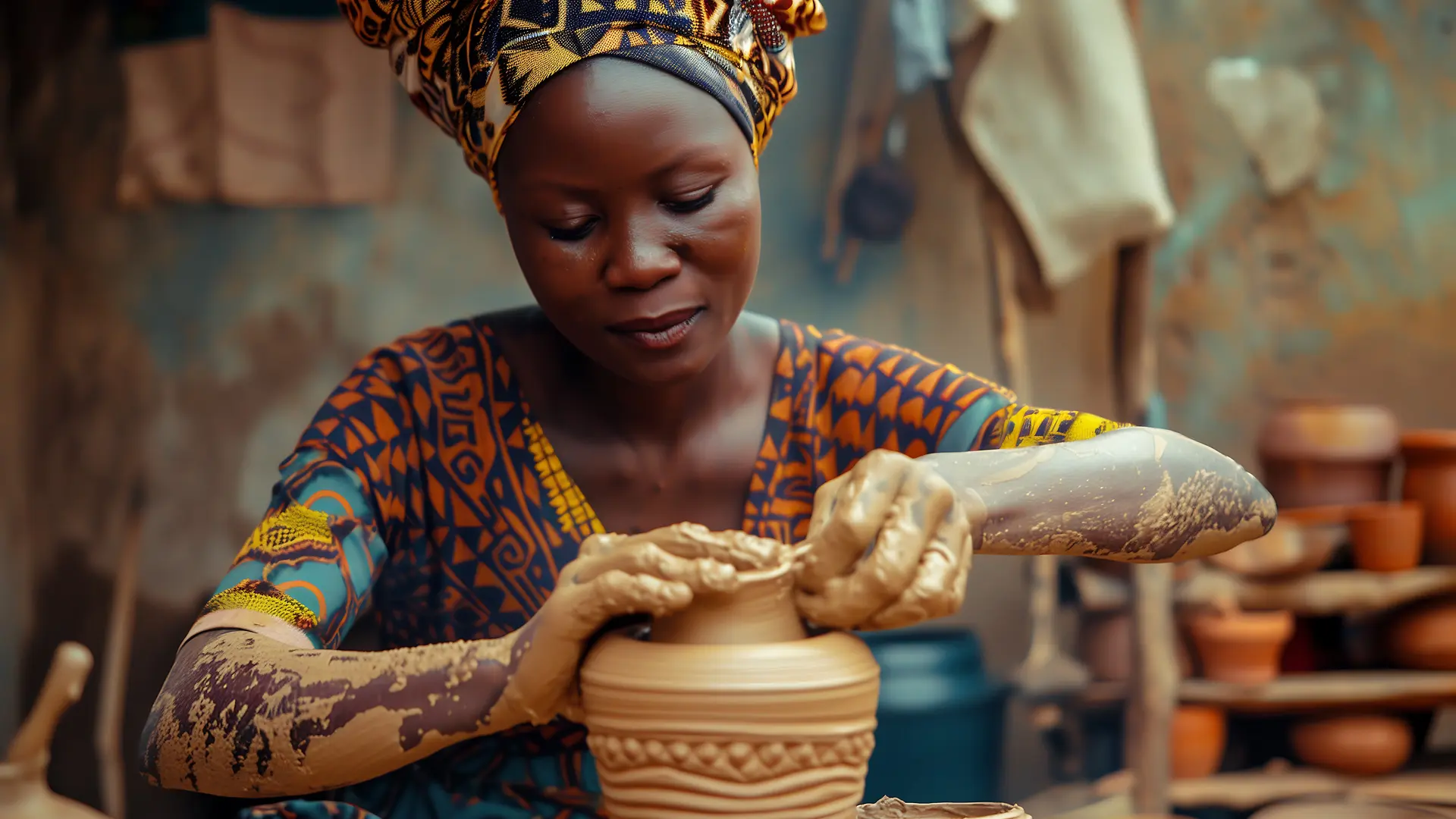
- Pottery
Pottery is a very old tradition in Rwanda. It is especially important to the Batwa people, who are
known for their skills in making clay pots.
Clay is taken from the ground, shaped by hand, and fired in a fire pit. The pots are used for cooking,
storing water, and holding local beer.
Pottery is now also used to make decorative items. Many local workshops in Rwanda teach pottery-
making and sell items to visitors.
- Weaving and Mats
Apart from baskets, Rwandans also weave mats, trays, and wall hangings using grasses, banana
leaves, and sisal.
These items are often used in homes or sold in craft markets. They are lightweight, durable, and
full of colour.
Weaving is mostly done by women and is often passed down from mothers to daughters.
- Traditional Clothing and Fabric Art
Rwandan traditional clothes, like the “Umushanana” worn by women, show elegance and culture.
This outfit is made from light, flowing fabric wrapped around the body.
Rwanda is also famous for colourful fabrics printed with African patterns. These are used to make
dresses, shirts, and accessories.
Many tailors in Rwanda use these fabrics to create modern fashion with a local touch. Fabric art
and fashion are now big parts of Rwanda’s growing creative industry.
Where to Find Rwandan Art and Crafts
If you're planning a trip to Rwanda, make sure to visit these places to buy authentic crafts and meet
local artists:
- Caplaki Craft Village – Located in Kigali, this is a one-stop-shop for all things handmade.
- Kigali Cultural Village – Offers space for local artists and crafters to showcase their work.
- Inema Arts Center – A popular modern art gallery in Kigali, started by two brothers, that
supports young talent.
- Umutima Cooperative – Known for handmade bags and accessories.
- Azizi Life – A fair-trade company that connects tourists with local artisans in rural villages.
Most of these places also offer workshops where visitors can try weaving or painting.
Rwanda’s Modern Art Scene
Besides traditional crafts, Rwanda is now home to a growing modern art movement. Young
artists use paint, photography, digital art, and sculpture to express themselves.
Themes like peace, identity, nature, and social change are common in Rwandan contemporary
art. Some of the most exciting new artists are gaining attention in Africa and abroad.
Places like Niyo Arts Gallery and Ishyo Arts Centre help these artists share their work with the
world.
How Art Helps Communities in Rwanda
Buying crafts in Rwanda does more than bring you joy—it also changes lives. - It gives employment to women and youth.
- It helps keep traditions alive.
- It supports eco-friendly and sustainable living.
- It brings people together—even those from different backgrounds.
Many cooperatives use part of their income for community projects like education and clean water.
So, when you buy a basket or a painting, you’re not just taking home a souvenir—you’re
supporting a dream.
Rwanda’s Heart in Every Craft
The art and craft of Rwanda are full of love, culture, and hope. Whether it’s a tiny bead bracelet
or a large Imigongo wall piece, each item is made with care and meaning.
When you visit Rwanda, take some time to explore its creative side. Meet the makers. Hear their
stories. And if you can, take a little piece of Rwanda back home with you.
Because in every stitch, every weave, every stroke—there’s a story worth sharing.